Why two dentists can recommend different numbers for the same mouth
It is common to get one opinion for four implants and another for six. That does not mean one dentist is wrong. Here is why it happens and how to decide.
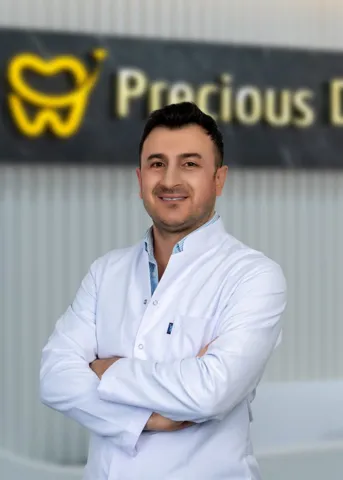 Medically reviewed by Dt. Hüseyin Yavuz Özbek, implant surgeon · Updated October 2026
Dentists disagree on four or six because the research does not show a clear winner, because they weigh grafting, reserve and bone loss differently, because they have different training and experience, because they may be looking at different images, and sometimes because of how their clinic is set up. A 2018 review found that studies used a range of implant numbers for the same kind of bridge. The way to decide is to ask each dentist to show you the reason on your own scan, and to compare the trade-offs rather than the numbers.
You send your X-ray to two clinics. One replies: “All-on-4 is ideal for you.” The other: “We recommend six implants on the top jaw.” Understandably, you wonder who to believe. This happens often, and there are good reasons for it. Understanding them turns a confusing choice into a clearer one.
Reason 1: the evidence does not pick a winner
If research showed that six implants clearly outlasted four, most dentists would recommend six whenever possible. It does not. A 2024 review of 53 upper-jaw studies found no significant difference in implant or bridge survival between four and six, but less bone loss around implants with six. A 2018 review of 93 studies found high survival whether fewer than five or five or more implants were used. When evidence is balanced, reasonable clinicians reach different conclusions.
The same 2018 review also shows how varied practice is: the studies it pooled used both fewer than five and five or more implants for the same kind of bridge, with six on top and five underneath most common in one group, and four on top and three or four underneath in the other. There is no single standard.
Reason 2: different weights on the trade-offs
Every recommendation weighs things that pull in different directions:
| A dentist who favours four may emphasise | A dentist who favours six may emphasise |
|---|---|
| Avoiding a sinus lift or graft | Reserve if one implant fails |
| Shorter, simpler surgery | Less bone loss in the upper jaw in one review |
| Fewer places to clean | Shorter overhangs at the back |
| The long record of tilted implants | Load shared between more supports |
| Lower cost at some clinics | Better margin for grinders and strong bites |
Neither column is wrong. They reflect different judgements about what matters most for you.
Reason 3: different images
A recommendation from a panoramic X-ray is a first view. It shows bone height reasonably well but flattens the jaw into two dimensions, so it cannot show width, and it can make the sinus look higher or lower than it is. A CBCT scan shows the jaw in three dimensions. Two dentists looking at different images, or one looking at photos only, may reach different answers that would converge on the same scan.
Reason 4: training and experience
Dentists develop preferences based on what they were trained to do and what has worked in their hands. A dentist who has placed hundreds of tilted implants may be very comfortable with four in a jaw where another would prefer to graft and place six. A dentist with long experience of sinus lifts may see grafting as routine. A meta-analysis of tilted implants found similar overall failure rates to upright implants, with more failures in upper-jaw-only studies, which can be read as support for either view depending on emphasis.
Reason 5: how clinics are set up
Some clinics build their offer around one protocol. That can mean real expertise in it, but it can also mean every patient hears the same recommendation. Package pricing, the implant system a clinic stocks and the number of trips a clinic can offer can all shape what is suggested. That does not make the advice wrong, but it is fair to ask whether the other option is offered at all.
As a publisher with its own clinic, we should say the same applies to us. Precious Dental offers both four and six at published prices with a small difference between them, so neither option is pushed for price reasons. Our advertising disclosure explains our position.
Reason 6: different patients in mind
Sometimes the two dentists are, in effect, planning for different versions of you. One may assume you want the fastest route to fixed teeth; the other that you want the most robust long-term result. One may not know that you grind, or that you smoke, or that you would rather avoid a second trip. Give both the same information: your health, medicines, habits, priorities and how much time you can spend on treatment. Recommendations often move closer once both dentists know the same things.
A worked example
A 66-year-old with an upper denture sends a panoramic X-ray to two clinics. Clinic A sees reasonable bone at the front but a low sinus at the back and recommends four implants with tilted back implants, temporary teeth within days and the final bridge on a second trip. Clinic B notices the same low sinus but also signs of heavy wear on the lower teeth suggesting grinding, and recommends a sinus lift on one side with six implants. Both are reasonable. The patient’s priorities decide: if avoiding extra surgery and time matters most, four with a night guard; if long-term reserve against grinding matters more, the sinus lift and six.
How to decide between two opinions
- Get both based on a CBCT scan, ideally the same scan, so they are looking at the same bone.
- Ask each to show you the reason on the scan: where the sinus or nerve sits, how much bone there is at the back.
- Ask each about the other option. “Could I have six? What would it need?” “Could four work? Why not?”
- Compare the trade-offs, not the numbers: grafting, time, trips, reserve, cleaning, cost.
- Think about your priorities. Avoiding extra surgery? Maximum reserve? Shortest timeline?
- Check the rest of the plan: brand, materials, overhang length, guarantee and aftercare.
Signs of a well-reasoned recommendation
- It is specific to your scan, not a general rule
- The dentist can explain the alternative and why they did not choose it
- It is in writing, per jaw, with the reasons
- It mentions your health, bite and habits
- There is no pressure to decide immediately
Signs to be cautious
- A firm number before anyone has seen an X-ray
- “Everyone needs four” or “four is never enough”
- No explanation of why the alternative is not suitable
- A discount that disappears unless you book today
- Reluctance to put the plan in writing
The NHS treatment abroad checklist suggests making sure you understand what is proposed and have it in writing before committing.
When opinions differ on more than the number
Sometimes the disagreement is bigger: one dentist proposes a full arch and another suggests keeping some teeth, or one suggests fixed teeth and another a removable implant denture. Those are larger decisions than four or six, and a careful second opinion is well worth it. Our article on keeping some teeth or going full arch covers that choice.
Questions to put to both dentists
- What on my scan leads you to this number for each jaw?
- Would the other number be possible, and what would it involve?
- How would your plan change if I grind, smoke or have diabetes?
- How long will the overhang be at the back?
- What happens if one implant fails?
Do not split the difference
Avoid asking a dentist to do the other dentist’s plan. Choose the dentist whose reasoning you trust, and let them carry out their plan.
In short
Different recommendations for the same mouth are common and often both reasonable. Make sure both are based on a 3D scan, ask each dentist to explain the alternative, and choose by the trade-offs that matter to you. For a structured way to think it through, see who needs which and our questions for a clinic.
Common questions
Is one of the dentists wrong?
Not necessarily. Both four and six can be reasonable for the same mouth. What matters is whether each recommendation is based on your scan and explained clearly.
Should I go with the dentist who recommends more implants?
Not automatically. More implants give reserve but may need grafting. Ask what each option involves for you before deciding.
What if one dentist only looked at a panoramic X-ray?
A panoramic X-ray gives a first idea but cannot show bone width or the exact sinus and nerve positions. A recommendation based on a CBCT scan is more reliable.
Can I show one dentist the other's plan?
Yes. Asking a dentist to comment on another plan, with the scan, often clarifies the reasoning on both sides.
Is a third opinion worth it?
If the two plans differ a lot and neither explanation convinces you, a third opinion with your scan can help.
Sources
- Polido et al. (2018), Clinical Oral Implants Research — Number of implants placed for complete-arch fixed prostheses
- Sharaf et al. (2024), Heliyon — Four or six implants for maxillary fixed prostheses
- Chrcanovic, Albrektsson, Wennerberg (2015), Journal of Dentistry — Tilted versus axially placed implants
- NHS — Treatment abroad checklist
Checked October 2026. Where we give our own view as a clinic, we say so.
Only a scan can settle it.
Send us an X-ray or scan if you have one. A dentist will tell you which option suits your bone, and say so honestly if neither is the right step.